Anatomy of the Car
We put an ordinary hatchback on the lightbox and x-rayed it while it runs. Metal stops the beam and glows; rubber, glass and air barely show. Point at a part, then open its plate and work it with your own hands.
The plates
- 29-01EngineSuck, squeeze, bang, blow: the cycle that turns petrol into turning.
- 29-02Clutch & gearboxWhy an engine needs gears, and how two shafts trade speed for force.
- 29-03DifferentialHow two driven wheels can turn at different speeds in a bend.
- 29-04SuspensionA spring to carry the bump, a damper to stop the bounce.
- 29-05BrakesTurning speed into heat, with a liquid lever and a computer that lets go.
- 29-06SteeringA gear on a toothed bar, and why the two front wheels never point the same way.
- 29-07CoolingWhere a third of the fuel's energy goes, and the wax capsule that decides when.
- 29-08Electrics & ignitionTwelve volts to start, tens of thousands to make a spark.
- 29-09Hybrid & electricA rotating magnetic field, and a car that refuels itself when it brakes.
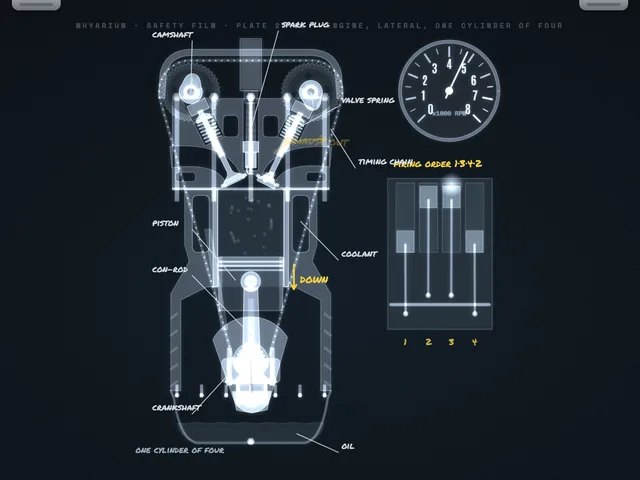 PLATE 29-01Engine
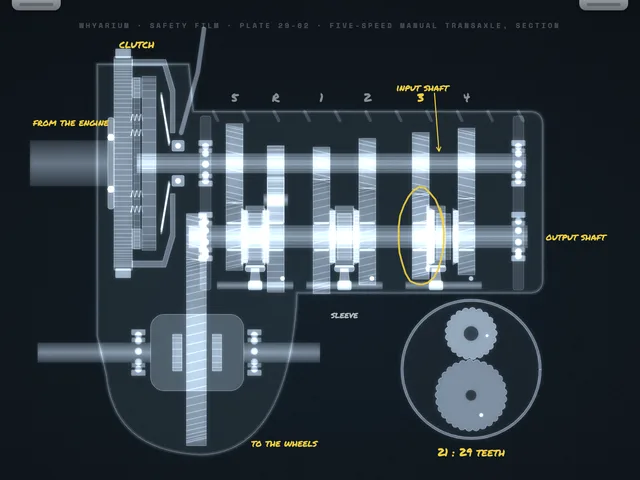 PLATE 29-02Clutch & gearbox
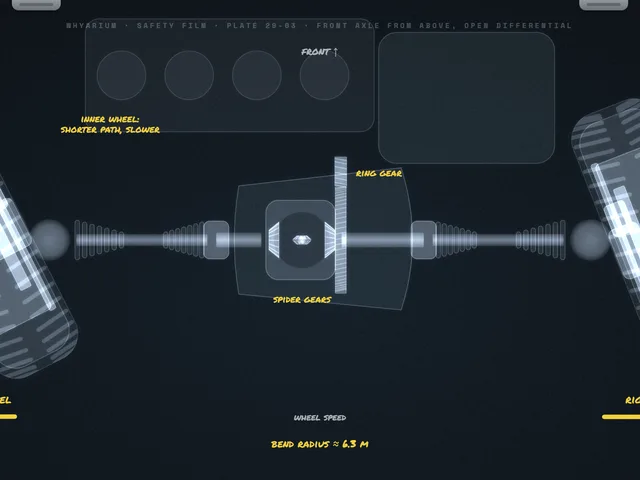 PLATE 29-03Differential
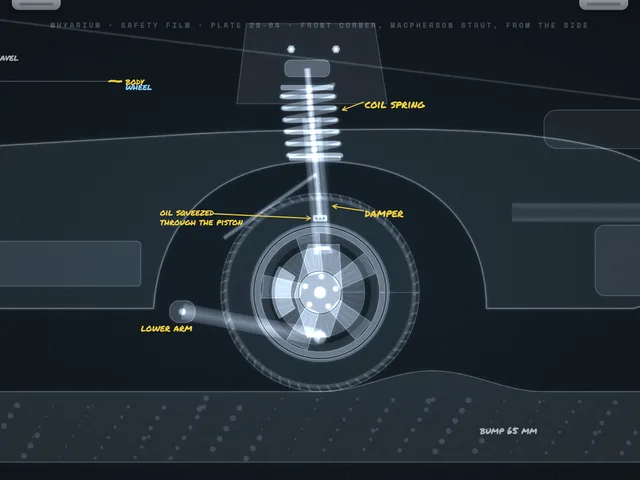 PLATE 29-04Suspension
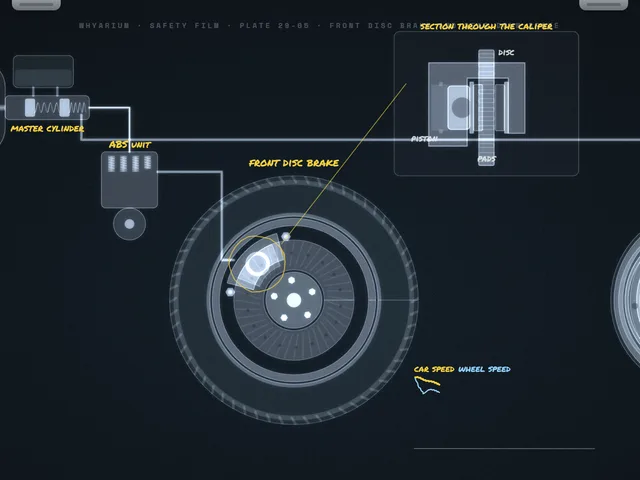 PLATE 29-05Brakes
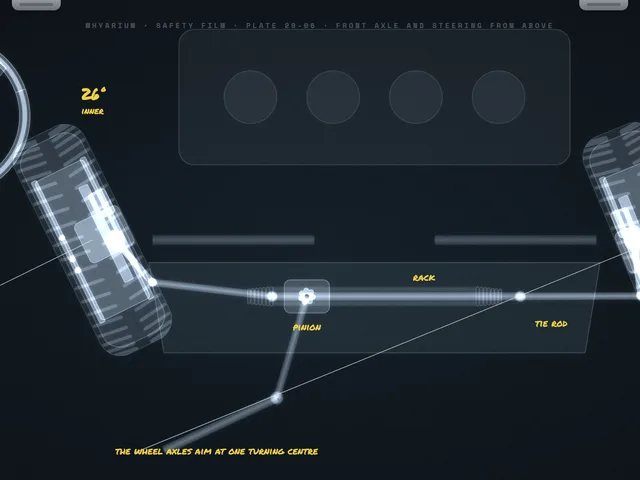 PLATE 29-06Steering
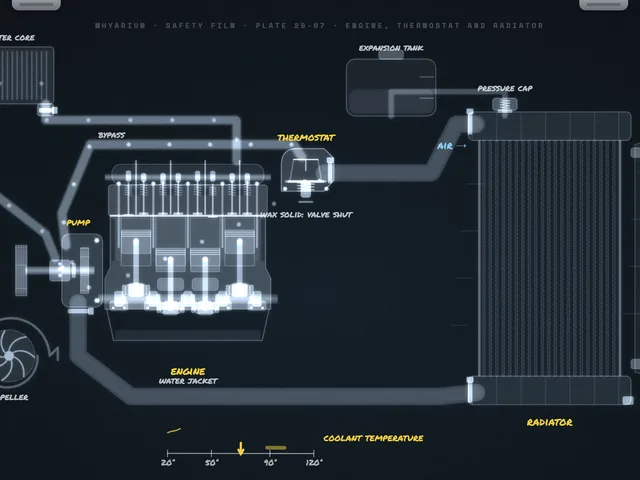 PLATE 29-07Cooling
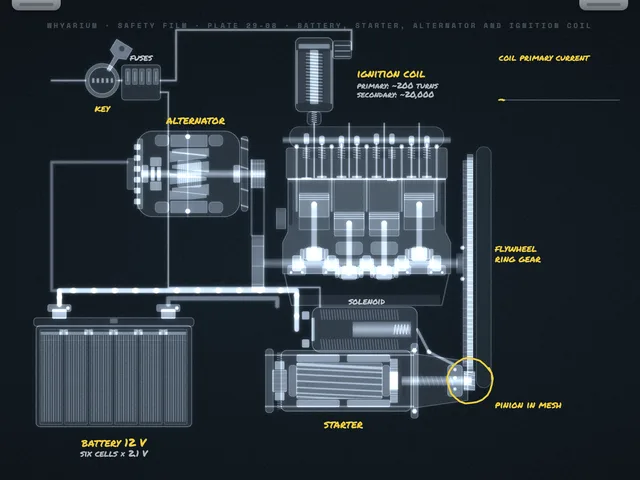 PLATE 29-08Electrics & ignition
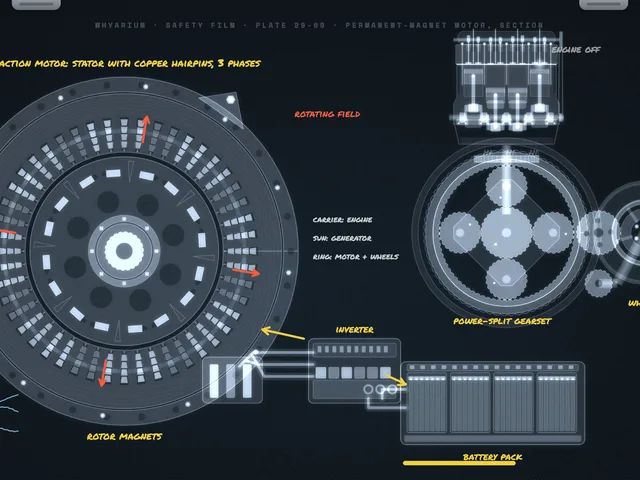 PLATE 29-09Hybrid & electric
How to read these films
A radiograph is a shadow. The brighter a spot, the more metal the beam had to cross on its way through: thick steel shafts and gears glow, aluminium castings are a soft grey, and rubber, plastic, glass and air all but vanish. Where two parts overlap, they add up, so you see the front of the engine and the back of it at once.
The yellow scribbles are grease pencil, the way a radiologist marks a film. Every machine here really moves: the numbers come from small physical models of each part, slowed down where the real thing is too fast to follow.
No particular make: the car is generic, drawn from how most small front-engined cars are built.