How it works
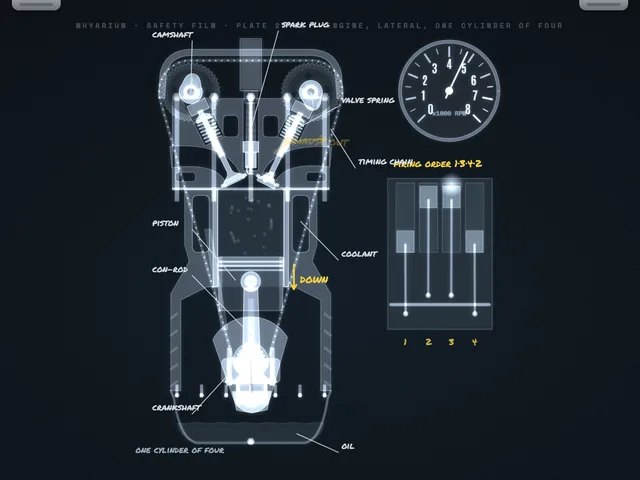
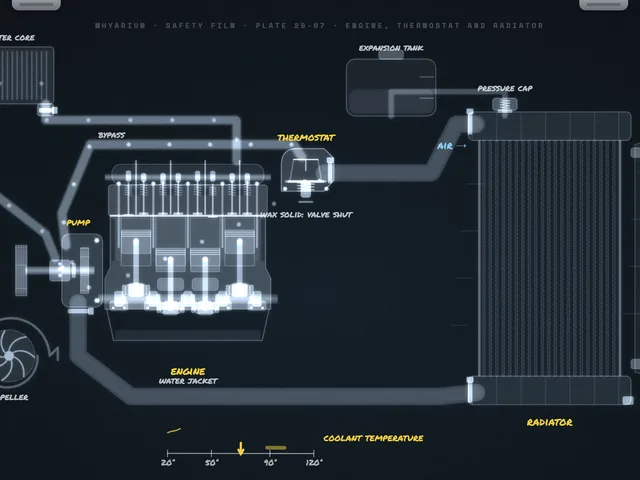
- The water jacket. Coolant flows through passages cast around the cylinders and through the cylinder head, picking up heat from the hottest metal.
- The pump. A belt-driven or electric pump with a small impeller keeps the coolant moving whenever the engine runs.
- The thermostat. A valve holding a capsule of wax. Cold, it stays shut, so coolant just circulates around the engine and warms it up fast. At about 90 °C the wax melts and expands, pushing the valve open.
- The radiator. Hot coolant passes through thin tubes with folded metal fins. Air rushing through the fins carries the heat away. At low speed an electric fan pulls air through instead.
- The pressure cap. The system is sealed and runs at about one bar above the air outside. Under pressure the coolant boils well above 100 °C, which gives a margin on hot days.
By the numbers
≈ 90 °Cnormal coolant temperature
≈ 1/3of the fuel's energy that leaves through the cooling system
50 : 50water and antifreeze (glycol), the usual mix
≈ −37 °Cwhere a 50:50 mix freezes
≈ 1 barextra pressure under the radiator cap
Worth knowing
The heater in the cabin is a small second radiator in the same circuit, which is why it only blows warm once the engine has warmed up. A thermostat stuck open gives a cold heater and higher fuel use; one stuck shut cooks the engine.
When it goes wrong
- Temperature gauge climbing
- Low coolant, a stuck thermostat, a dead fan or a failing pump.
- Sweet smell, puddle under the front
- A leaking hose, radiator or pump seal.
- White exhaust smoke and lost coolant
- A failed head gasket letting coolant into the cylinders.
- Heater blows cold
- Thermostat stuck open, or air trapped in the system.