How it works
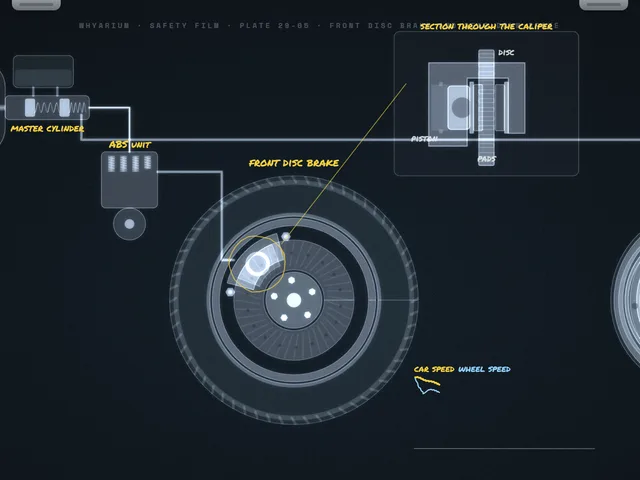
- A liquid lever. The pedal pushes a small piston into the master cylinder. Brake fluid can't be squeezed, so the pressure reaches every wheel. There it pushes on much bigger pistons, which multiplies the force.
- Disc brakes. At the front, a caliper straddles a steel disc that turns with the wheel. Its piston squeezes two pads against both sides of the disc. Discs shed heat into the air quickly, which is why they are used where most braking happens.
- Drum brakes. Many small cars still have drums at the back. Two curved shoes sit inside a drum and are pushed outwards against it. They are cheap, enclosed, and easy to use as a parking brake.
- ABS. A locked wheel skids, and a skidding wheel can't steer. Sensors watch each wheel; when one starts to lock, valves briefly release and reapply its pressure, many times a second, so the tyre keeps rolling at the edge of its grip.
By the numbers
≈ 4 : 1a typical pedal lever ratio, before any servo or hydraulics
500 °C+a disc's surface after repeated hard stops from high speed
up to ≈ 15 / show often ABS can release and reapply a wheel's brake
1978electronic multi-channel ABS first offered on a production car
Worth knowing
Brake fluid slowly absorbs water from the air. Water boils far sooner than the fluid, and on a long downhill the steam bubbles can be squeezed, so the pedal goes soft. That is why fluid is changed every couple of years even if nothing looks wrong.
When it goes wrong
- Squeal, then grinding
- Pads worn down to their wear indicator, then to the metal.
- Spongy pedal
- Air or water in the brake fluid.
- Steering wheel shakes when braking
- Discs worn unevenly (often called warped).
- Car pulls to one side
- A sticking caliper piston or unevenly worn pads.